In previous years, vending machines remained largely dormant in the Chinese market. However, with the widespread adoption of mobile payments, the Internet of Things (IoT), and 5G technology, this industry is experiencing explosive growth.
According to statistics, Japan has the highest penetration rate globally at one vending machine per 23 people, followed by the United States at one per 47 people, and China at one per 109 people. In countries along the Belt and Road Initiative and emerging markets, the penetration rate of vending machines is even more astonishingly low—Indonesia has one vending machine per 23,000 people, 1,000 times lower than Japan.
WHERE IS THE CHANCE?
Traditional developed markets: Currently in a replacement cycle of traditional cash machines to smart connected machines, there is a strong demand for the intelligent transformation of existing equipment;
Emerging markets (Middle East/South America/Africa/Southeast Asia): Growth potential is just beginning to open up. Saudi Arabia is expected to add 6,000-9,000 units annually, South America’s smart machine CAGR is 23.5%, and Southeast Asia is projected to import 65,000 units from China in 2025, with imports expected to exceed 90,000 units in 2026.
The global vending machine market is projected to reach approximately $82 billion by 2026, with smart vending machines experiencing a compound annual growth rate of 15.4%.
So, what makes vending machines stand out compared to traditional brick-and-mortar stores? The core advantages lie in the following six areas:
Advantage 1: Asset-light operation, extremely low barrier to entry
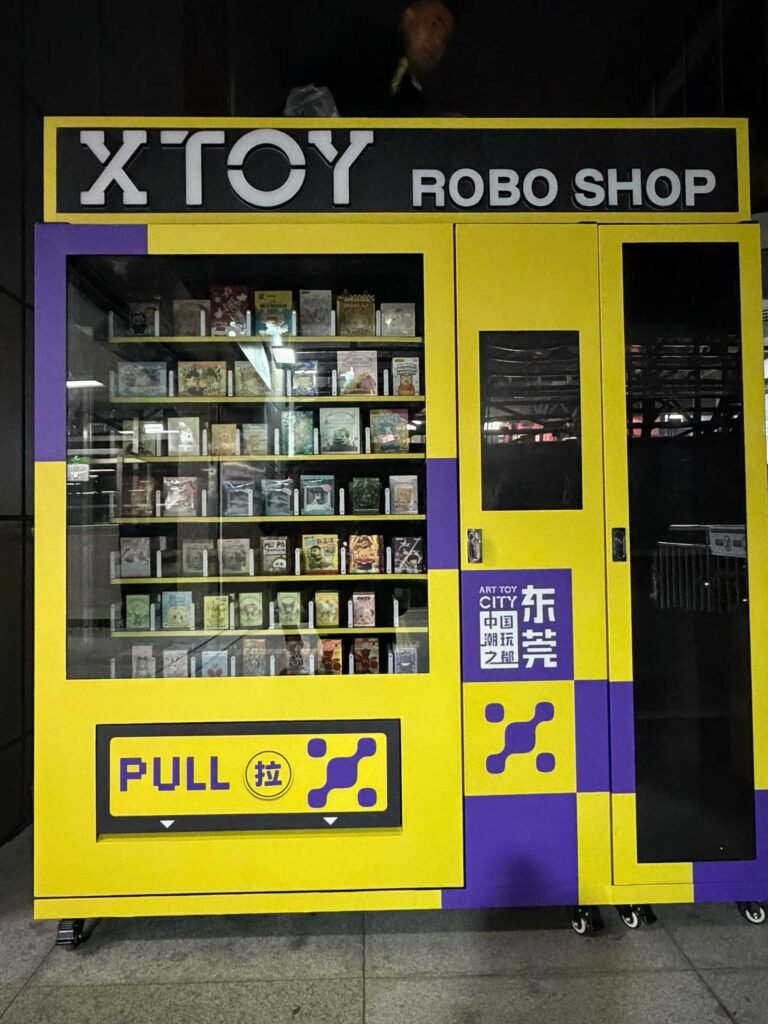
The investment for a single smart vending machine is only a few hundred to a few thousand US dollars, a much lower capital threshold than that of a physical store. More importantly, it does not require expensive street-front shops, occupying less than 1 square meter of space. Fragmented spaces such as schools, scenic spots, factories, and office building lobbies can all become prime locations. This means extremely low trial costs—deploy 10 machines at verification locations first, and then replicate them in batches after they are successful.
Advantage 2: Controllable Risk, Flexible Expansion
Brick-and-mortar stores are constrained by location; poor customer traffic often leads to huge losses. Vending machines, on the other hand, offer exceptional flexibility. If a location proves unprofitable, it can be easily relocated to a better spot, minimizing trial-and-error costs. This small boat is easy to turn around characteristic is the key to its rapid expansion in different market environments around the world.
Advantage 3: Adapting to Trends and Resisting Rising Costs
In the current context of a rapidly aging global population and soaring labor and rent costs, vending machines perfectly align with the trends of unmanned and intelligent operations. Requiring no human intervention, they effectively mitigate the risks associated with fluctuating labor costs, making them the optimal solution for addressing rising retail costs.
Advantage 4: Screen as Media, Monetizing Traffic
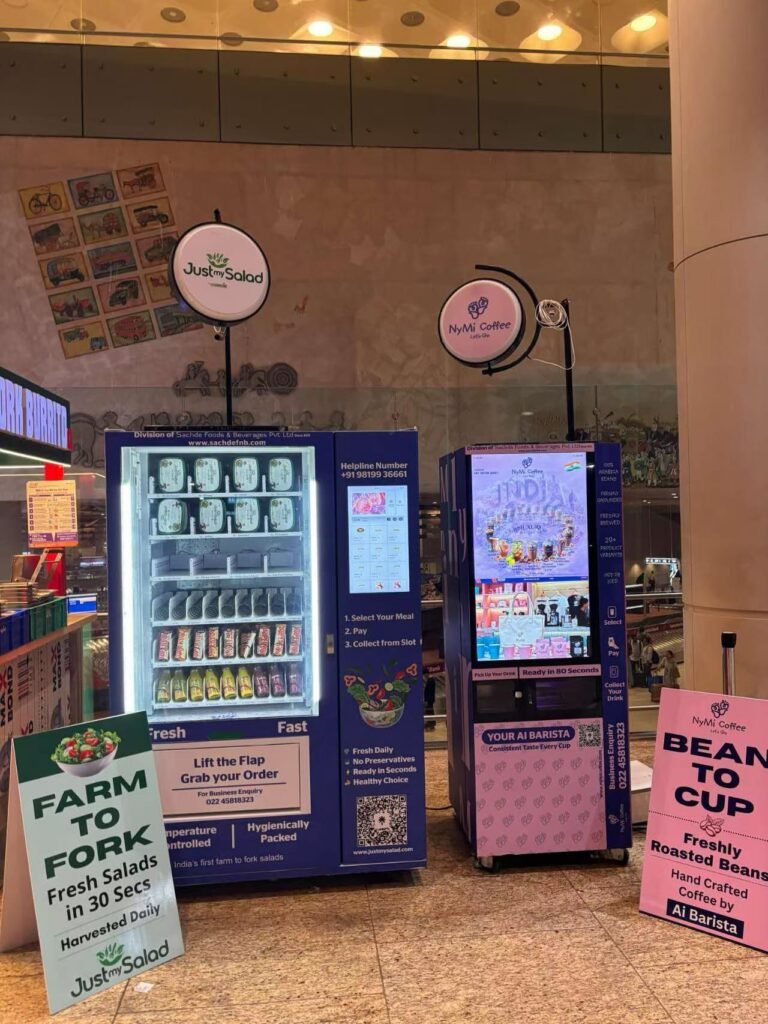
Modern smart vending machines are equipped with high-definition large screens, serving not only as transaction terminals but also as advertising mediums. Besides reducing their own marketing costs, they can also achieve a dual profit model of selling goods + advertising by opening advertising space to other brands, unlocking the additional value of location traffic. This transforms a single machine from a retail terminal into a media asset that can continuously generate cash flow.
Advantage 5: A 24/7 Super Employee
A vending machine is a miniature convenience store. It requires no rest, is unaffected by emotions, and generates revenue continuously as long as there is electricity, regardless of wind, rain, day or night, truly achieving unlimited operating hours. 24/7 operation is particularly attractive to overseas markets where labor costs are high and overtime is expensive.
Advantage 6: Diverse Business Models, Covering All Scenarios
Vending machines have long since transcended the single model of selling beverages. From fresh juices, coffee, bento boxes, and adult products to shared power banks and mini KTVs, their business models have expanded to dozens of niche areas, precisely targeting various specific consumption scenarios. The more diverse the scenarios, the stronger the demand for customized models, which is precisely the future development direction.
From traditional machinery to intelligent terminals, vending machines have undergone technological iterations and market trials. Under the wave of “new retail,” this efficient, convenient, and low-cost retail format is becoming an inevitable choice for the times.
For the global market, developed economies need to upgrade their machines, while emerging markets need to deploy machines from scratch—and simplx intelligent vending machines happen to hold both cost advantages and intelligent features as trump cards. New things inevitably triumph over old things.
This is not just a slogan, but a reality that is already unfolding.