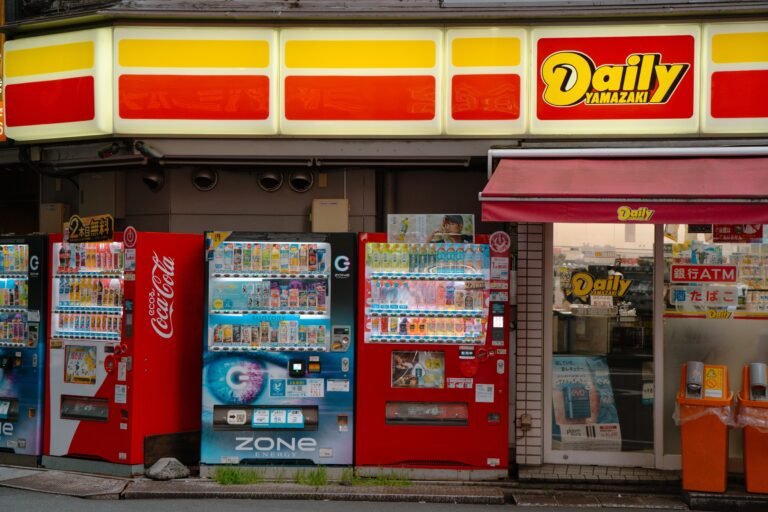
With today’s fast-paced lifestyle, 24-hour, innovative, fashionable, and intelligent self-service retail has become a mainstream habit for young consumers. Vending machines are not limited by time or location, save manpower, and offer fast transactions, making them an important outlet for retail upgrades. However, with technological iterations, machines are no longer simply “one machine selling all goods”—different dispensing channel structures result in significant differences in cost, compatible product categories, and operational efficiency.
SIMPLX categorizes mainstream vending machines into the following types based on structure and application scenarios to help operators quickly identify their needs.
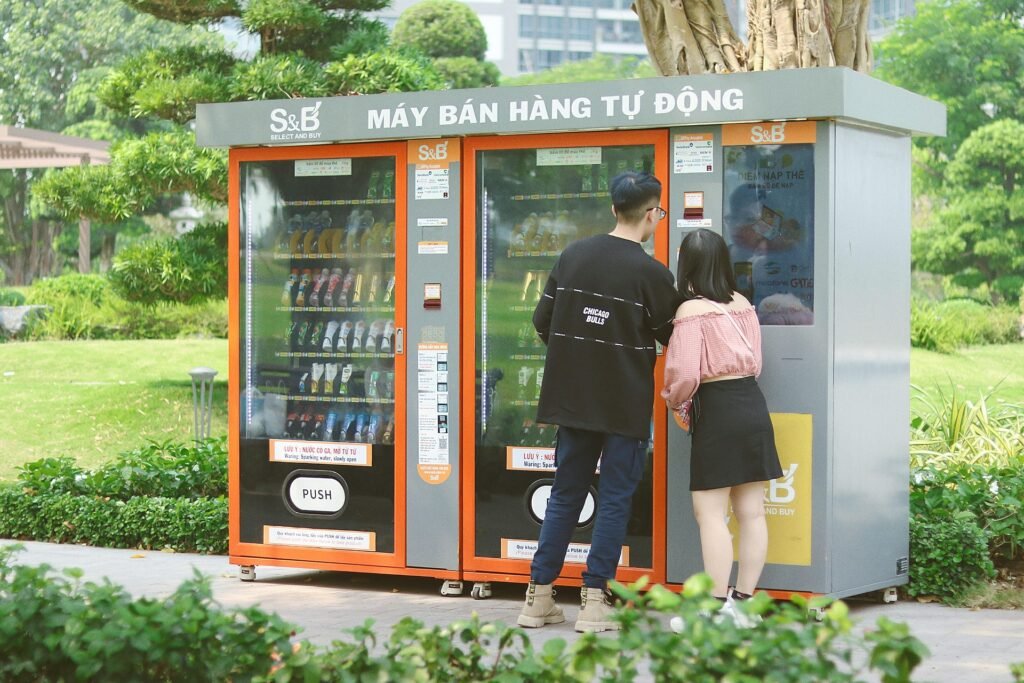
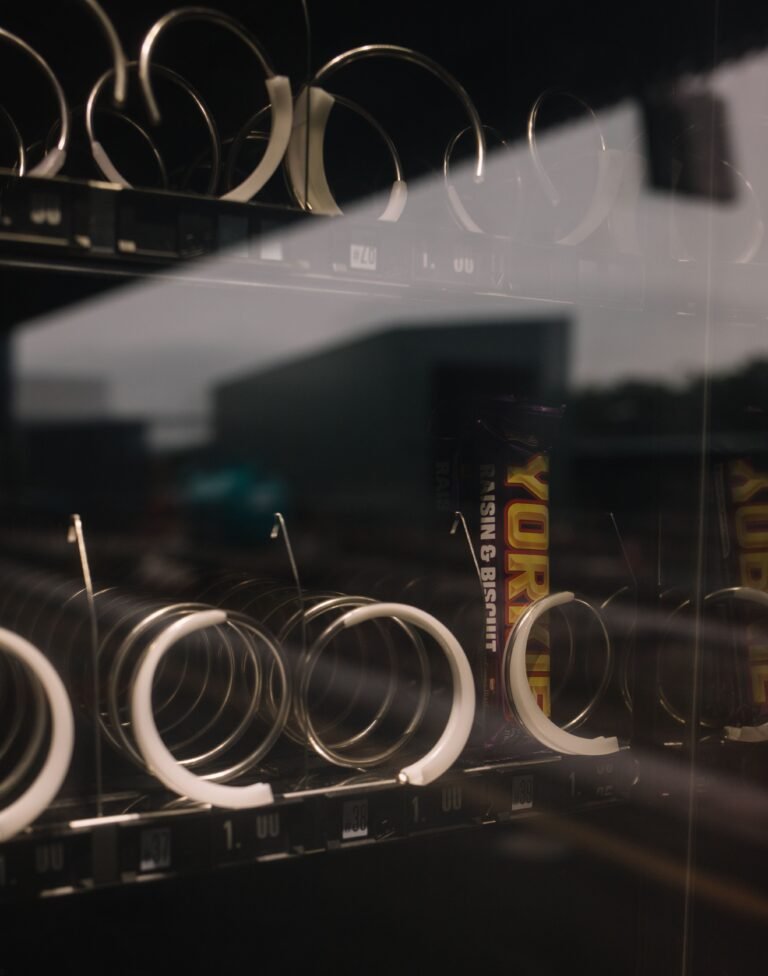
1.Spring-Loaded Product Channel Vending Machine
Structural Features
An early, mature solution. A spring rotates to push out goods; suitable for selling beverages, snacks, instant noodles, and small daily necessities.
Advantages
Relatively simple structure, many models available, low initial procurement threshold, and wide product category compatibility.
Disadvantages
- The diameter and length of the goods must match the spring pitch, otherwise blockage is likely.
- Replenishment requires row-by-row placement with strict alignment, involving a lot of manual work.
Price Reference:
A standard complete machine costs around $1800, varying depending on cabinet size, number of aisles, and whether it uses refrigeration/touchscreen.
Suitable for
Office snacks, factory daily necessities, community general merchandise, and as a complement to grid cabinet main units.
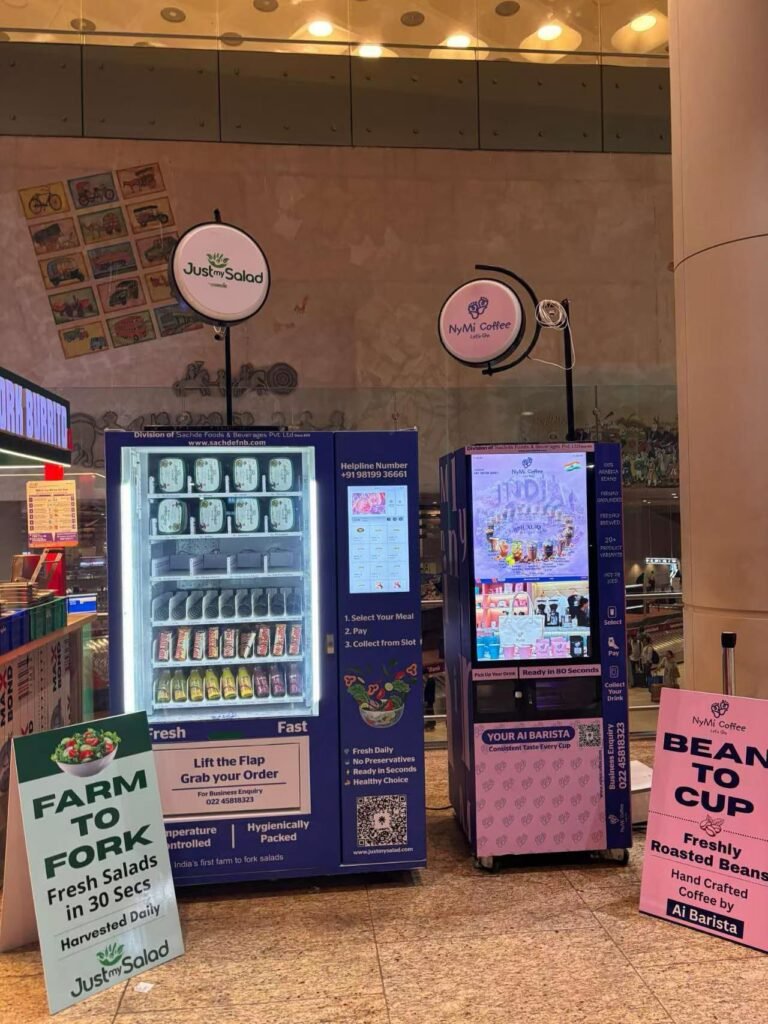
2.Belt Conveyor Vending Machine
Structural Features
An extension of the spring system, using a belt to support and deliver goods. Requires goods to have a flat bottom, be resistant to tipping over, and have a relatively fixed volume.
Suitable for
Boxed meals, short-canned beverages, boxed snacks, yogurt cups, and small batches of fresh food.
Advantages
More suitable for “flat-bottomed” goods than spring conveyors; more stable when dispensing boxed meals/small boxes.
Disadvantages
Replenishment still requires individual placement; pure conveyor belt large-capacity machines are not cheap.
Price Reference
Generally starts at $3000, depending on cabinet size, temperature zone (room temperature/refrigerated), and whether it has a lift mechanism; if mixed with spring-loaded units in the same cabinet, the price will be recalculated based on the configuration.
Suitable for
Office lunch boxes, convenience store hot food replenishment, library light meals.
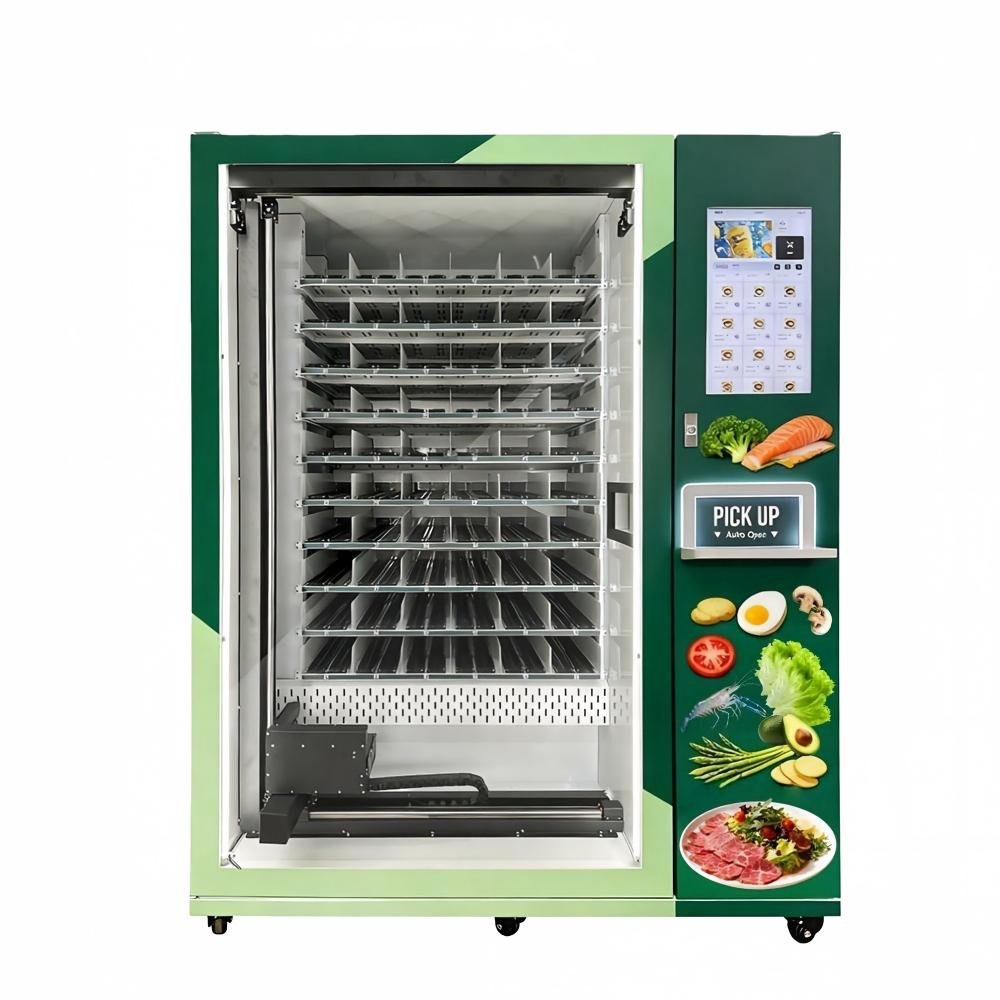
3. Locker Machine
Structural Features
Multiple independent small doors and compartments, each with independent electronic control; one item per compartment.
Advantages
- Almost unrestricted by packaging shape: can hold irregular shapes, large items, sets, blind boxes, adult products, and gift boxes.
- Simplest and cheapest structure.
- Can be combined and expanded into a “main cabinet + secondary cabinet” configuration.
Disadvantages
- Only one item per compartment, low space utilization;
- Empty compartments appear visually empty;
- Not suitable for high-frequency, high-volume standard products.
Price Reference
- Single/Small Compartment Units Without a System: Approximately $1000, but usually cannot operate independently and requires connection to a host system.
- Independent Compartment Units with a System: Approximately $1300, can be sold individually via barcode scanning.
Suitable for
Lucky boxes, mobile phone accessories, adult products, medicines/consumables, gift sets, trendy toys, and airport luxury goods.
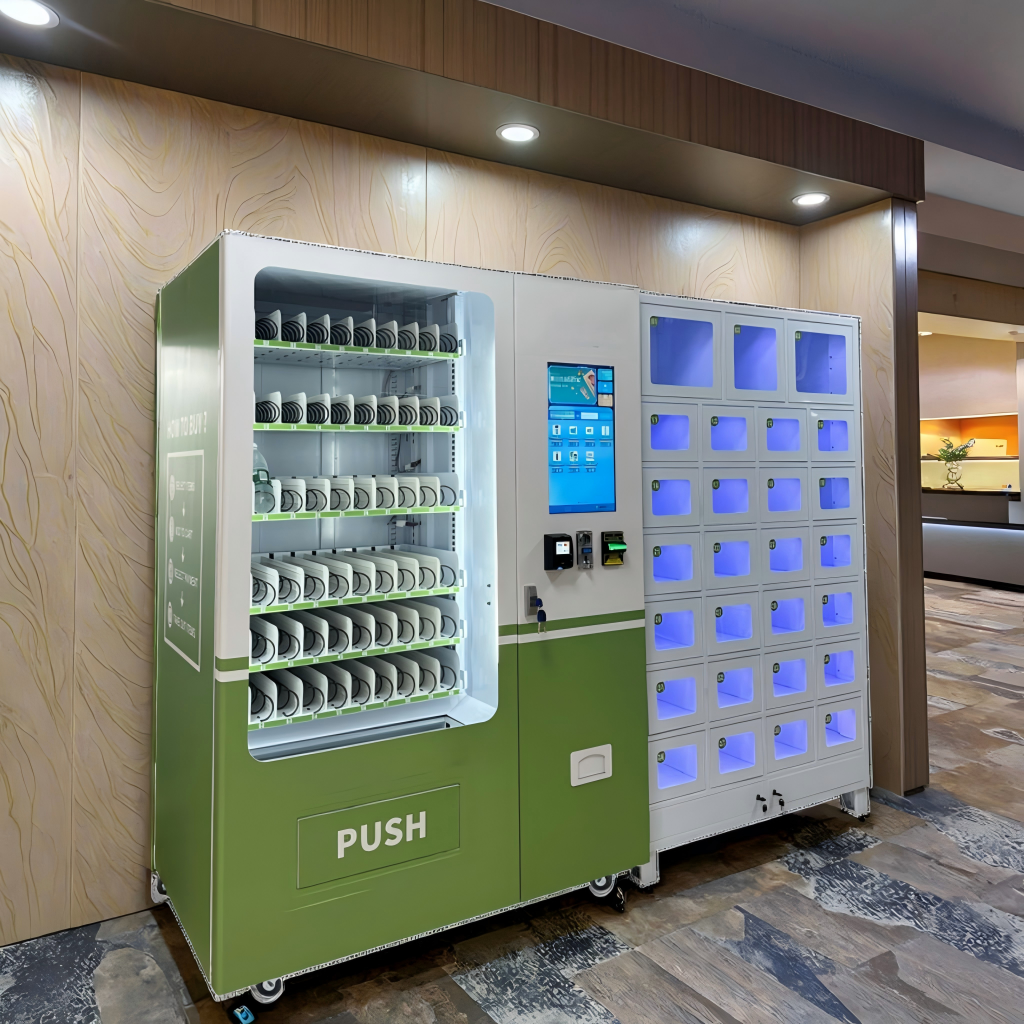
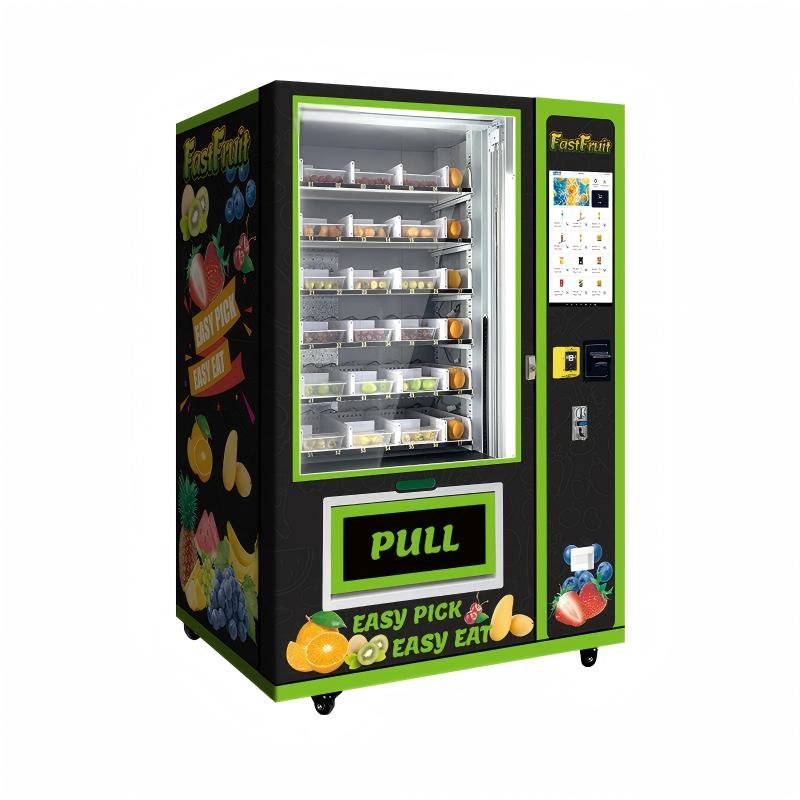
4. Elevator Machine with Automatic Lifting System
Structural Features
An automatic lifting receiving platform is added to a spring/track system. During delivery, the elevator supports the goods and lowers them to the receiving port to prevent them from falling.
Suitable for
Glass bottles, fruits and vegetables, eggs, boxed meals, cakes, high-value fragile items, and mixed fresh food.
Advantages
Most stable delivery, almost zero damage from drops; can sell multiple categories, suitable for “unmanned micro-supermarkets”.
Disadvantages
Large size, complex structure, high cost, and requires significant space for transportation and installation.
Price reference
Generally starting from around $3300; higher prices are possible for large-capacity/dual-temperature/large-screen/multi-channel solutions.
Suitable for
Fresh food in high-end office buildings, hospital nutrition meals, bottled beverages in tourist areas, and pre-positioned micro-warehouses for fresh produce.
How to choose a vending machine based on your needs?
- Mixed sales of snacks, beverages, and daily necessities → Spring-loaded main display case, low-cost start-up.
- Boxed meals/short cans/flat-bottomed small boxes → Tracked or spring + tracked combination.
- Blind boxes/irregular shapes/sets/personal items → Grid display case, standalone or as a secondary display case.
- Glass bottles/fruits and vegetables/eggs/meals/high-value, fragile items → Automatic lifting multi-functional machine
Other Factors Affecting the Final Price
Within the same sales channel, prices can be raised or lowered by:
- Refrigeration/heating temperature zones (refrigerated, room temperature, hot food, or a combination thereof)
- Touchscreen size and advertising system (7.1-inch/21-inch/dual-screen make a big difference)
- Payment modules (basic QR code scanning, cash module, face recognition/membership card)
- Cloud backend: Inventory, sales, temperature, remote alarm, AI product selection
- Materials and protection: Indoor type, dustproof and waterproof outdoor type, scenic area sun protection type